 Christ is risen! Indeed He is risen!
A glorious Feastday of Feastdays to all!

[In the Upper Room] our Lord explicitly appealed to our psalm...to show that this hatred and this persecution by the world are a realization of prophecy: "But this happened that the word might be fulfilled which is written in their law, 'They hated Me without a cause'" (v. 7, also 68:4 and 108:4).
These, then, are psalms in which the praying voice is that of Christ Himself, and, by reason of her sharing in the sufferings of Christ, the Church prays these psalms in His Person.
...
The prayer of Christ here is a battle prayer, for He wages war on the forces of sin, darkness, and destruction: "Let ruin come upon them unawares." ... This is the prayer of Christ doing battle with the forces of sin and death, looking forward to the hour of His victory, when His very body, brought down to the grave, wil rise again in the paschal victory: "And my soul shall be joyful in the Lord; it shall rejoice in His salvation. All my bones shall say, 'Lord, who is like You, delivering the poor from him who is too strong for him.'"
 And that God, that shield that makes fire as cool dew of the evening, that Lord whose Kingdom, He tells us, is not of this world, is a scarlet-robed, thorn-crowned, poured-out, crushed, vulnerable, and rejected God.
 Back home from Amarillo; the services -- or lack thereof, as my granddaddy wanted it -- were good in the sense that his nieces and nephews (dad's cousins) came in from all over, and it was good to meet some of them for the first time. I was honored to deliver a prayer -- loosely based on our prayer for the departed (which, not surprisingly, includes a petition for those still in this life) and stated in "down home" language. Barely got through it, but it was good to commend both his soul and our lives into God's hands.
55 Maxims
(2007)
Father Tom explains this list of maxims in an excellent podcast for Ancient Faith Radio.
"Ps 29 speaks of the Resurrection of Christ, who is the End (v. 1), and together with Him, the resurrection of the Church. Man's dilemma is the death and decay of his body in the grave (v. 10) and the dwelling of his soul in Hades (v. 4). As a result, these enemies rejoiced over him (v. 2), and his life was filled with weeping (v. 6), trouble (v. 8), lamentation and sackcloth (v. 12), and sadness (v. 13). But through Christ's resurrection (lifted me up, v. 2), (1) the Church will be healed (v. 3), that is, the body will be raised in beauty and power (v. 8) to immortal life forever (vv. 7, 13) at "the resurrection of the dead and the life of the world to come" (Creed); (2) the souls of the righteous in Hades were brought out from there at His Resurrection (v. 4); and (3) the Church is filled with praises (vv. 5, 13), thanksgiving (vv. 5, 13), great joy (v. 6), dancing and gladness (v. 12)."An interesting observation from Fr. Patrick: he translates v. 11 -- ηκουσεν κυριος και ηλεησεν με κυριος εγενηθη βοηθος μου -- using the imperative "Hear, O Lord, and have mercy on me; Lord, be my helper," while the OSB (perhaps taking their cue from the Douay-Rheims) translates it as "The Lord heard and had mercy on me; the Lord became my helper." Regardless, the Lord did hear His Christ and answered Him (Heb. 5:7).
 Way back forever ago I started to go over the psalms of my namesake, David, in the Psalter. I dropped it almost just as far back ago.
 Ironic (but not surprising for me) that, after calling for a vote for the cover of the Orthodox Study Bible, Old and New Testaments, I promptly took it off, much preferring the hansome burgundy with gold trim you see to your right (click for a closeup). We're glad this came in time for Great Lent, so we can read the Church's lectionary from a translation of the Church's Old Testament.
 So...I would say this, as a starting point: even if an Evangelical is unwilling to concede to some sort of real presence of Christ in the Eucharist, it seems to be fairly obvious that Christ is continuing His discourse in John 6--that of eating His flesh and drinking His blood--specifically in this moment, in the upper room, by giving the Apostles a tangible way to accomplish this command. Apparently this was how He was going to make it possible--somehow--for men to eat His flesh and drink His blood...it was going to be through this Eucharistic meal.
I confess to being an AFR junkie; it’s almost all I listen to on my iPod. I am particularly fond of Dr. Bradley Nassif. I may not respond with such vehemency as he has to the state of Orthodox clergy, but I do see -- and I'm not alone in this -- a need for increased awareness not only of the content of Scripture among the faithful, but of the central, saving message of the gospel.
I think the awareness of the need for this within the Church is (at least) several decades old; Father Alexander Schmemann wrote of his own awareness of it in the seventies. Father Tom Hopko states repeatedly that “it’s all about God,” and not anything else. So folks in the “upper eschelons” of the Church here in America are aware that, when folks don’t know the basic Bible Story characters in the OT, or don’t know any of the parables of Christ, then something is wrong.
Granted, in my time as a Southern Baptist growing up, I met my fair share of similarly disinterested youth (and adults!) who came on Sunday morning and little else (or, if the youth came more often, it was for social purposes only; they seemed bored to tears during the worship and “sermonette” time). So I don’t want to come across as too one-sided.
Ultimately, though, I think what folks in the West are dealing with is (surprise, surprise!) two different extremes. On the one hand, the Evangelical world that dominates our American (and, in particular, southern) culture is severely truncated in its gospel message. Redemption, according to this particular stripe of Christianity, is seen almost always as a forensic “statement of intention” on God’s part, and nothing more. The Son has changed the Father’s mind about us through a contract written in Blood, so we have an ironclad guarantee that moves the Father’s hand away from the gate to paradise so that we can be allowed — snow-covered dung though we still are — to enter heaven. The Father looks on us with favor instead of vindictive wrath now, and all sin (whether it actually is still present in our hearts post-profession of faith) is forgotten by God, and we are granted passage to heaven. This gospel message is preached, long, loud and strong by Evangelicals, though without my post-convert ramifications added, I’m sure.
On the other hand, we have the Orthodox, whose idea of salvation is a body/soul/spirit infusion of the very life of God into the believer, and is rooted not only in Calvary, but in the Manger, the Mount Tabor, the Empty Tomb, the Mount of Olives (Ascension). The entire advent of Christ thus brings man from ontological death to actual life through a life-long cooperation with divine grace. This idea is intertwined in every hymn, every fast, every Scripture reading, every sacrament, to such a degree that we have at our disposal the most thorough Bible commentary and study resource available to mankind. The simple message at the core of all of our often “over-byzantined” worship, however — that “Christ came into the world to save sinners, of whom I am first” — though it be prayed in every divine liturgy, is quite often missed, the forest of this glorious statement being looked over for love of all the trees (icons, vestment and chant styles, rubrics, ethnic social activities, language issues, and more).
What this leads to, then, is Evangelicals looking at us and saying, “I like the way I do it better than the way you don’t.” Hmm. Harsh, but perhaps something we need to keep in mind. As Father Tom states in his talk on the book of St. John’s Apocalypse, everything in our worship service is meant to point us to the revelation of Jesus Christ. That’s why the Gospel and the Eucharist are the two ways in which Christ is brought out to us in the Divine Liturgy; He is revealed in the Apocalypse as the Word of God (the Gospel) and as the Lamb of God (the Eucharist). St. Ignatius, I believe, stated that our teaching is in agreement with the Eucharist, and the Eucharist confirms our teaching (I may be misquoting this; if so, forgive me and, please, correct the quote in the comments, as I can't seem to google it at the moment). Both the didactic proclamation of the good news given through hearing the written Word of God through reading and worship, as well as the intimate, physical, sacramental acts that unify us — body, soul and spirit — to our Incarnate Lord are needed to bring us into a holistic union with Him. It’s not that the Orthodox Way has been tried and found wanting, but rather that it’s been found difficult and left untried.
This faith is, let me say again, much harder than what Evangelicalism teaches. This may seem overtly hostile to many devout Evangelicals, and I am aware of many Evangelical groups that stress holiness of life and struggle against what we Orthodox call "the passions," but I believe this to be in spite of their soteriology, not because of it. God will not “guarantee” or “make” good works come out of someone. No false comfort is given to someone in the Orthodox Church to make him think that “he’s already believed, so good works will, ultimately, come”; God will never override free will and, as such, we must never be haughty, but fear, as our God, the Consuming Fire, will appear, and those of us who’ve loved His appearing will be purified in glory, while those of us who did not conform ourselves to Christ in spite of the grace given to us — perhaps even through laziness or a false sense of security brought on by all this “I know that I’m saved!” talk — will wish the rocks to fall on us.
This is another facet of the Gospel that the Orthodox Church preaches, yet I thank God that Her saints bear witness that our God loves mankind more than anything else and, though He will not ever trespass our free will in order to monergistically “establish good works,” always wills that we (continually!) repent and (continually!) come to the knowledge of the Truth.
 For those who haven't read it yet, Dr. Clark Carlton has written an Open Letter to Orthodox Christians on Behalf of Ron Paul's candidacy for President.
 Father Stephen Freeman has a post that got me thinking about the Eucharist, which is, more than anything else, what drew me out of where I was as an Evangelical and made me hungry for something more -- the reality of God in this physical plane. I constantly tell folks that the main reason I joined the Orthodox Church was that, when I looked at the bishops of the first and second centuries AD, then re-read the Scriptures in light of their consensus, I came away with a drastically different view of what the reality of being "in Christ" actually means.
 We were on the road for the long weekend, so I missed my usual yearly post for this. HERE is a nice, short memorial (and link) from someone not so otherwise occupied. It contains my favorite quote from this general:
“Duty is the sublimest word in our language. Do your duty in all things. You cannot do more. You should never wish to do less.”And another, circa 1856, four years before siding with the South after being offered command of the Northern armies:
"There are few, I believe, in this enlightened age, who will not acknowledge that slavery as an institution is a moral and political evil."
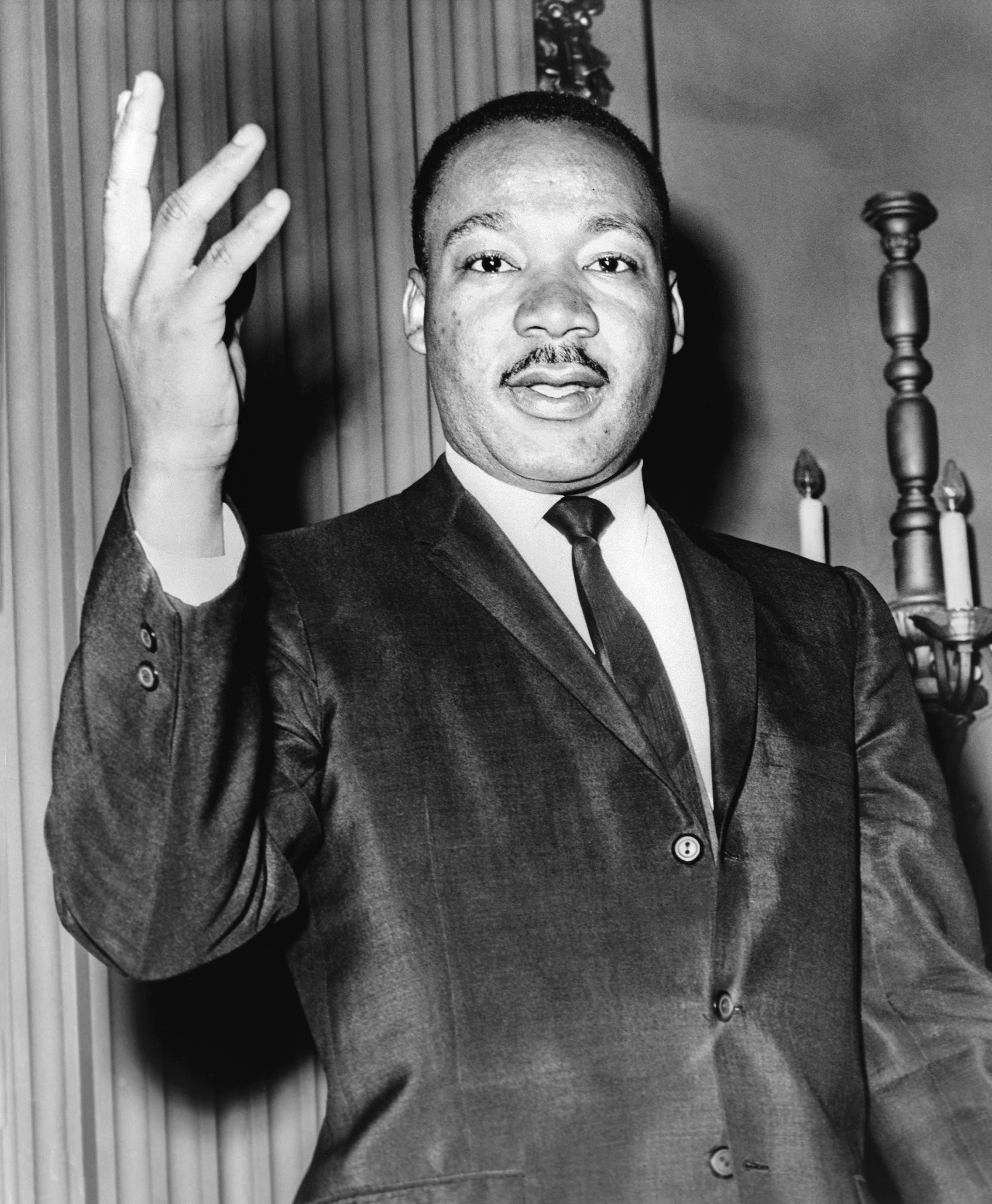 Though some might wonder at this, I do believe the good general and the late Dr. Martin Luther King Jr. would have had held much in agreement regarding the nature of healing of race relations, particularly in the South, and particularly in terms of how violent intervention on the part of the government, regardless of its constitutionality, does nothing to win the hearts and minds of those it seeks to influence. In neither man's era was morality successfully legislated, but prayer (and both were men of prayer) has melted many a heart towards those of other colors.
 Church school was last Saturday; seeing as how Theophany was the previous Sunday, I thought a lesson on baptism was apt, so...I came up with what you see to your right. You may have seen something like this before, perhaps slightly different. We not only made these, but "scavenger hunted" around the church grounds for the envelopes with certain colored beads (and the clue to finding the next color of bead) in them. The black and red are where I remember them being in Southern Baptist VBS -- the black being sin and death which, due to the Fall, casts us out of the Kingdom (Jn. 3:5);
 and the red being the bloody death of Christ in which we participate in baptism (Rom. 6:3-4a) -- but instead of the white bead following, the blue (baptism -- Acts 22:16) and yellow (the oil of chrismation -- Acts 2:38) followed, after which the resurrected life of Christ follows (Rom 6:4b). The purple (an Orthodox addition, to be sure) is the color of Great Lent in our parishes, representing a lifetime of repentance and laying hold of that for which Christ laid a hold of us (Phil. 3:12).
 UPDATE: I received in the mail today the four volumes of the Blessed Theophylact's Explanation (seen left). They're softbound, but with care I think they'll hold up. I am quite excited about being able to read such a revered Orthodox commentary alongside the morning Gospel readings. Now if St. Tikhon's would just get those lectionary calendars sent out to our parish so I'd have the readings close at hand (cough, cough)...btw, for an excellent review of these volumes, click HERE for the Ochlophobist's always-eloquent thoughts.
 From my sister-in-law...well, no, she didn't buy me the book to your right, but she got me the Barnes and Noble gift card with which I purchased said prize. I had borrowed this book about a year and a half ago and only now was getting around to reading it. I heartily recommend this book to anyone wanting to seek after the presence of God continually. Father Tom Hopko said that his mother told him the three things he was to do in order to encounter God in his life: Go to church; say your prayers, and never forget God. This "never forgetting God," traditionally, is done through the Jesus Prayer. The book The Art of Prayer goes into how the Jesus Prayer is meant as a tool for achieving a constant awareness of the presence of God who is everywhere and fills all things. What's wonderful about this anthology of quotes is that it is mindful of the "one thing needful"; it places a desire for the conscious awareness of God's presence at the center of one's life, and explicitly warns against those of us who would get caught up in "stylizations" such as types or length of prayer rules (or of prayer ropes, for that matter), the words of the prayer instead of the One invoked by said prayer, imaginations or physiological responses. The only thing a Christian should strive for is a constant understanding that God is present, and calling on the name of Jesus has done this for countless saints through the ages. I thoroughly enjoy this book and look forward to finishing it.
 Every year my wife's family does a "white elephant" style gift exchange due to the sheer size of the family gathering. The men each bring a gift for a man, and the women bring one for a woman. As I spent the majority of my time at the gathering soothing and rocking a five-month old to sleep, I was unable to participate myself, but my wife, always one to look out for me, spied the BBQ utensils to your left and snatched them up for me. My old spatula and tongs were about to split from overuse, so these will be very useful (and will apparently last a good long while!) when I fire up the grill and send the aroma of seared cow flesh into the air in one of the most anticipated of all spring rituals. The budding of the branches in Spring, the warming of the air--all this is accompanied by the rebirth of the fire and the...urm...burnt...offerings? Well, not burnt...medium, medium well tops...
 And what would all this pagan talk be without a libation offering? A colleague of mine and I recently sat down for a lengthy talk which included, among other things, various beverages of the alcoholic persuasion. He knew I have a fondness for Shiner beers and asked if I had ever tasted any of the commemorative brews (Shiner brews one every year and will brew their hundredth one next year!). I was not aware of this, sad to say, so neither did I know that, for the 1997 commemoration, a bohemian black lager was chosen as the brew o' the year. I was graced with a six-pack of these lovely longnecks and, while the flavor is definitely hoppy and dark, the bitterness and strong aftertaste usually associated with said black beers is notably absent. This is a smooth, enjoyable beer that will go well with any and all animals sacrificed to the aforementioned BBQ gods.
Then they sent to Him some of the Pharisees and the Herodians, to catch Him
in His words. When they had come, they said to Him, "Teacher, we know that
You are true, and care about no one; for You do not regard the person of men,
but teach the way of God in truth. Is it lawful to pay taxes to Caesar, or
not? Shall we pay, or shall we not pay?"
But He, knowing their hypocrisy, said to them, "Why do you test Me? Bring
Me a denarius that I may see it." So they brought it. And He said to them,
"Whose image and inscription is this?"
They said to Him, "Caesar's."
And Jesus answered and said to them,
"Render to Caesar the things that are Caesar's, and to God the things that are
God's." And they marveled at Him. (St. Mark 12:13-17).
 Christ's rebuke places the emphasis on what it needs to be: man has lost the ability to lift himself, and all others, and all our lives up unto Christ our God, all the while thanking Him for a life in which he can know and be known by those who are outside of him, other than him, yet mystically be one with him. To take it that necessary step further, man no longer acknowledges that this life begins, abides, and finds its supreme end in mystical union with the One who is wholly Other, the One who is ever-apart yet breathtakingly imminent, the One who, in His artistry and craftmanship, bent over clay and breathed His icon into us. To borrow Chekov's phrase , the "blighted image" that we are now is an affront to that divine creativity and ends, of course, with everything from an impaling of the Firstfruit to a Tree to a burning of the brethren in Kenya.
 In this case, the "earthy," physical contribution of man through his art, through his music, through his architecture, was seen to be a suitable vehicle for communicating the faith through the world. Not the least of these things was seen to be the holy icons, whose "artistic language," developed over time, expressed the gospel in its fullness in spite of its not being explicitly delineated in Scripture and its being a development in which men played a part.
 Icons are, truly, an incarnational expression of the faith, in which man has played a part in expressing the truth that Christ is, by nature, the glory of God made flesh, and the saints are, by grace, that same enfleshed glory. (Holy St. Seraphim, who in the flesh saw the light of Tabor, pray to God for us).
 Orthodox, not being so strictly tied to clerical necessity as the Roman Church tends to be (we can, for example, have laymen or lay monastics as spiritual advisors), would at least be more open to including something like this in communicating the gospel through this "lay ministry," affirming a revered figure in the already-existing culture (Granted, this may be an example of it being "easier to ask forgiveness than permission," as a priest or individual bishop may have to allow it at the local level before the Church at large would accept it later, but this, too, has precedent).
 My family hails from Texas, my wife's from Kentucky. She, more than I, was blessed with a closer memory of rural Kentucky life (one set of her grandparents still live in a very small town; the other surviving grandmother lives in a mostly blue-collar/old-money-aristocracy southern town. From both sides she's gleaned some of the songs and some of the sayings unique to this part of the States, and she's going to pass those onto our girls. (Side note: for those of you interested who've not yet read it, THIS POST from the Ochlophobist is worth a read to extrapolate on this idea). This uniqueness of expression, from local customs to dishes to crafts to instruments, is what makes us creative; the same creativity that molded Adam and animated his being is what still churns in us, still calls us to creativity, still calls us to pick up slide guitar or mandolin and play the old songs, using them to make new songs, to live in communion with ones who share our flesh and to communicate as an icon of culture the whole of our lives -- including and first and foremost the One Who Is our Life -- to those companions in the flesh.
 Father Thomas Hopko, in his recent release "Praying with Icons," says that icons are a presence of the mighty works of God that are depicted therein. Whether it be the icon of the Nativity, Theophany, St. Nicholas, the Theotokos, or Christ Himself, icons stand as a visible reminder of the invisible reality in which we as believers find ourselves: that of baptized, sealed believers who, though we live in this visible world, are not limited to the seen, as we are by virtue of our baptisms and chrismations citizens of the invisible lasting City, wherein our worship actually takes place. While we don't "need" icons to pray--anyone truly seeking God can be said to be praying--for us as believers who've been initiated into the reality of God's mystical union with His Church, icons are necessary for prayer in its fullness, since all the universe, beginning with the flesh of Christ Himself, has been "shod with the grandeur of God," and it is in these images that we see created things proclaiming what all matter should proclaim and what even the rocks would proclaim if we were silent: that God has visited His people and has done great things for us, and holy is His Name.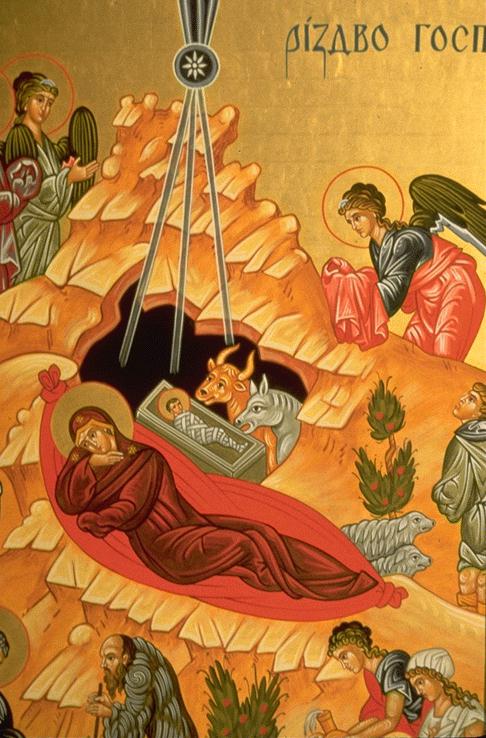
 Your Nativity, O Christ our God,
"Above everything we begin to move our Christian life out of the realm of abstraction and into the realm of living. We pray rather than think about prayer. We trust God rather than discussing the concept of trusting God. We act on the basis of faith rather than spending time talking about the importance of faith. We make every effort to embrace God as good and at work in all things."
 So it is with both regret and resignation (though also with peace) that I announce on this, the Feast of the Dormition of the Theotokos, the dormition of this blog, as well. For the past two and a half years I, both as Peter and later as David (pictured right, to the left of the Root of Jesse and her Branch, cradled in the lowermost branch above the fellow on the floor) have discussed the things I think about, wonder about, and get angry about. Y'all have been wonderful to talk to, disagree with, and build a community of sorts with. I have been truly blessed. My "signing off" does not come, surprisingly enough, from my newly-enlarged family (though that is a time committment, to be sure), as much as it comes from this feeling that's been dogging me lately that I am doing the opposite of what Dr. Carlton and Fr. Stephen have been saying that we should do: I feel as though I've been talking about the cure that Orthodoxy offers the world, yet doing precious little to take the cure myself (or, at least, not taking it as often, well, or as much as I should). So it is that--until further notice, at least--I shan't be updating. I will be lurking around some blogs, though, and may even comment. This blog will continue to exist in its current form in case someone should need to google something that I, in a better moment, may have blurted out. Perhaps I shall pick this up again someday; God willing, I'll be wiser and more prayerful when I do so.
 What is maddening to me is the refusal of God to break in, angel choirs blaring, and announce this triumphantly and in unignorable fashion to folks other than those already willing and capable of bearing it...and, often, those who experience Tabor experience more light and stillness than sound and fury, the latter being the M.O. to which this world is addicted and which, so it would try to convince us, is the only reliable way to make an impact. Squeaky wheels and pushy, slick sales pitches -- from the boardroom to the evangelist -- are seen to be the only way to get one's message across to its intended audience. One must, after all, compete with all the noise coming from all the competition.
 Our passions feed us the same lie, only internally. There the promise of sweetness, of fulfillment, of recognition, of praise, of (vain)glory -- all this is trumpeted loudly, yet all we are offered by God, in contrast, is hidden in Sinai's cleft and Tabor's quiet, bright mount. When we desire a divine scream that will silence all carnal appetite, what we are given, rather, is a command to be still when we feel like stripping a gear. We're told to be small -- to be weak in the world's eyes and bury our faces in our cloaks -- when we feel like standing up for "rights" that vanish in the light of the realization that all of life is love of other. We're told to be light when we'd rather be heat -- the difference is that of a candle versus a flamethrower -- and we see our God to be a Fire who will consume yet forbears now so that not even a tiny bush is consumed in order that a young, fugitive shepherd might get the sober, simple message.
 We attend services till we can no longer stand. We join every activity at Church (assuming we are blessed enough to be at a parish with a sufficiently developed sense of community to accommodate this) until we have no more time for anything else. We may even fill our time with so much online Orthodoxy that we don't have to deal with our own parish or our own selves. All of these movements, these sounds, these flashing, neon lies we deal ourselves not only will not substitute for stillness, smallness, and genuine light in our own lives, but are answered, not in kind by our Lord (nor by our Lady), but are largely ignored by them, really, and the humble, steady, peaceful light streaming from radiant flesh is shown only to those who have eyes to see and ears to hear.
 It's been said by many of us impatient types that "relationship evangelism"--a phrase usually associated, through crudely and unfortunately so, w/St. Seraphim's injunction to "acquire the spirit of peace and thousands around you will be saved" -- is really a "cop-out" compared to the more aggressive, confrontational brands of reaching the masses, for one can simply claim to be acquiring said Spirit while actually engaging in spiritual apathy. Meanwhile, "results" are not seen and the world is not converted. What's frustrating is that the genuine answer to this accusation provides neither comfort nor a solution to the aggressive soulwinner's burden, for rampant buttonholing and (apparent) decision-making do not (usually) equate to genuine spiritual fruit, nor does genuine, humble acquisition of holiness (always) differ in appearance from those whose silence springs from indifference, so the false security we usually try to derive from watching for "results" is usually ill-founded, for we expect fruit in days or months which takes years to cultivate. Yet it is this silent, light, and sober joy which will allure those who seek to live in a world free from the need to muster up all our own clamorous, pretentious glory.
 My daughter and lovely wife were, by God's grace and providence, churched last Sunday. My wife has been immensely grateful for the return to worship within the community (I'm glad she's back, too). Baptism will take place, Lord willing, come this Saturday. Your prayers are coveted.

 My REAL first car (as opposed to the ACTUAL first one which I totaled a month after turning sixteen) was a 1987 Toyota Tercel, the motor in which, in fine Toyota fashion, served me impeccably through 2003, when I bought a truck. The a/c in the Tercel worked for (maybe!) a month after I bought it. Never did work afterwards. Survived brutal OK and TX summers by rolling down the window and speeding.
